General review
Gesso
Gesso is actually a soft, fluid paste that is most often applied to a painting canvas, but in some cases, it is used for patching frames, sculptures, and other relief works.
Main uses of Jeso paste:
Some canvases have a rough, uneven surface, and when an artist wants to create a classical work, they need to paint on a smooth, ideal surface in order to render fine details. 🖼️
How to use Jeso paste:
In many cases, it has been observed that art enthusiasts, out of ignorance, spread gesso onto the canvas surface with a paintbrush, or even with their bare hands or unsuitable palette knives… Whereas for this task, one should use a gesso spreading knife—a type of knife at least 25 centimeters long and about 3 centimeters wide, similar to a cake knife with a triangular, conical blade—to spread the gesso across the canvas with a uniform surface and without any extra lines, so that the effects of the canvas's fabric texture are not lost. Using improper scrapers and brushes makes the painting canvas surface uneven and prevents the artist from removing the gesso in a timely manner.👨🏻🎨👩🏻🎨
Chemical structure of Jeso:
Gesso is made from copolymer resins and is water-soluble, which is why it dries very quickly, especially on unprimed canvases. Therefore, using a special palette knife and working quickly when applying gesso is of particular importance. 🧪🧫
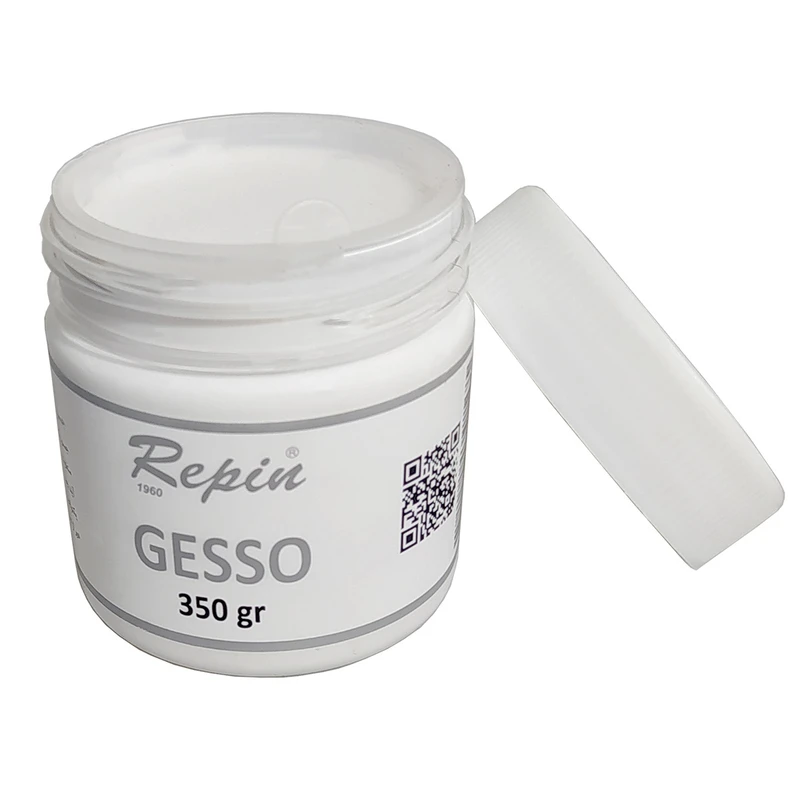
Jasu Rapin:
This gel is made from the finest raw materials under specific chemical conditions and is harmless to the skin.
If it gets on your hands and dries, you can gently massage them under warm water until it gradually washes off.
Avoid contact of the product with clothing, carpets, and any type of fabric. ⛔